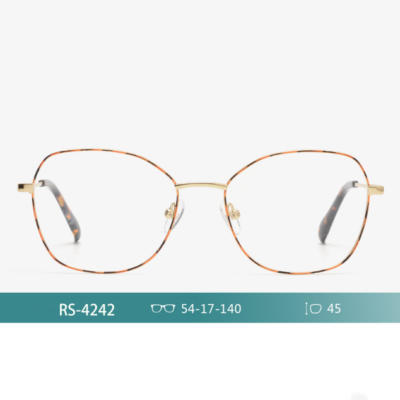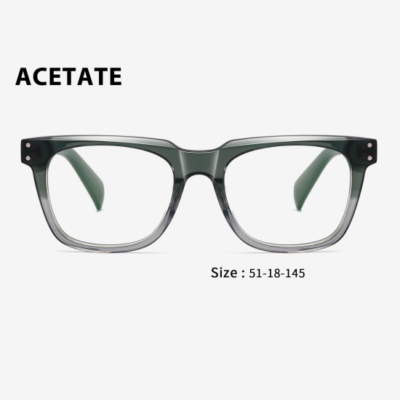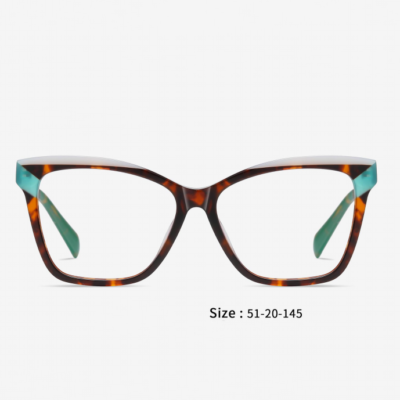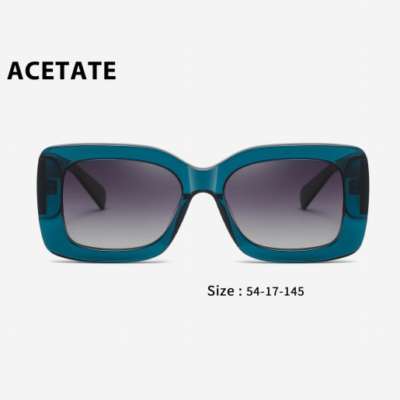

After more than a decade of experience in eyewear design and manufacturing, we have observed a persistent industry tendency: fit assessment often relies excessively on dimensional metrics—such as nose pad height and temple length. While these parameters are objectively relevant, they represent only part of the equation. True fit is not about forcing anatomical conformity; rather, it is achieved when the frame integrates so seamlessly with the wearer’s physiology and behavior that it becomes imperceptible during daily use.
Significant regional differences extend well beyond anthropometric variation—for instance, the commonly cited “smaller facial dimensions” in Asia-Pacific markets. Consider the U.S. West Coast: many technology professionals wear eyewear for 12+ hours per day, predominantly in a forward-leaning posture—head down while using smartphones or viewing screens. Even a frame weighing only 23 grams—with a marginally anterior center of gravity—can induce perceptible fatigue over time. Accordingly, our ergonomic design process incorporates a 15-degree forward-tilt simulation, reflecting real-world usage patterns—not idealized laboratory postures.
Stylistic preferences also exhibit marked geographic divergence. In Southern Europe—particularly Italy and Spain—consumers favor expressive frames characterized by pronounced brow lines, keyhole nose bridges, and decorative detailing. By contrast, Northern European markets—including Germany and the Nordic countries—demonstrate strong preference for minimalist aesthetics: ultra-thin stainless-steel constructions, precision-welded joints, and absolute visual restraint—where even a single redundant wire may undermine perceived quality. These distinctions reflect deeply rooted cultural values, not subjective judgments of taste.
Color perception follows similarly nuanced regional logic. In France, display stands in deep tortoiseshell outperform black counterparts by 30% in sales—a preference rooted in associations with heritage, refinement, and understated sophistication. Conversely, in the U.S. Midwest, overtly vibrant hues often trigger hesitation; instead, muted tones such as gunmetal gray and matte black are perceived as dependable, versatile, and contextually appropriate.
Our regionalization strategy is therefore grounded in empirical analysis—not intuition. It rests upon three integrated data pillars:
- a validated facial morphology database
2. a contextual wearing-scenario profile (encompassing posture, duration, activity type, and environmental exposure)
3. a dynamic regional color trend index. Based on this framework:
Northern European offerings emphasize structural integrity and rational minimalism, realized through high-precision steel alloys;
Southern European collections prioritize material expressiveness and artisanal character, delivered via premium acetate sheet construction;
North American designs focus on all-weather adaptability and sustained comfort, enabled by advanced composite laminates.
When customer needs are rigorously understood, manufacturing priorities shift accordingly: from cost-driven mass production to agile, demand-responsive operations—supporting small-batch runs, staggered shipments, and market-specific inventory segmentation. While competitors continue to compete on price, we advance through purposeful design—tailored not to generic averages, but to the lived realities behind every face.
We specialize in ODM and OEM.
Our clients choose us for stable quality and reliable delivery.
If you have any question please feel free to contact us anytime.
Shenzhen Grand eyewear– your preferred choice.