Time flies so quickly. Just over a month from now, it will be 2026 again. With the rise of digital economy and advancements in technology, competition in the traditional eyeglasses industry is also increasing. So, what do you think the future trend of eyeglasses development will be like? I believe it will mainly develop in the following directions:
1. Style and Design: Contradiction aesthetics dominate the design language.
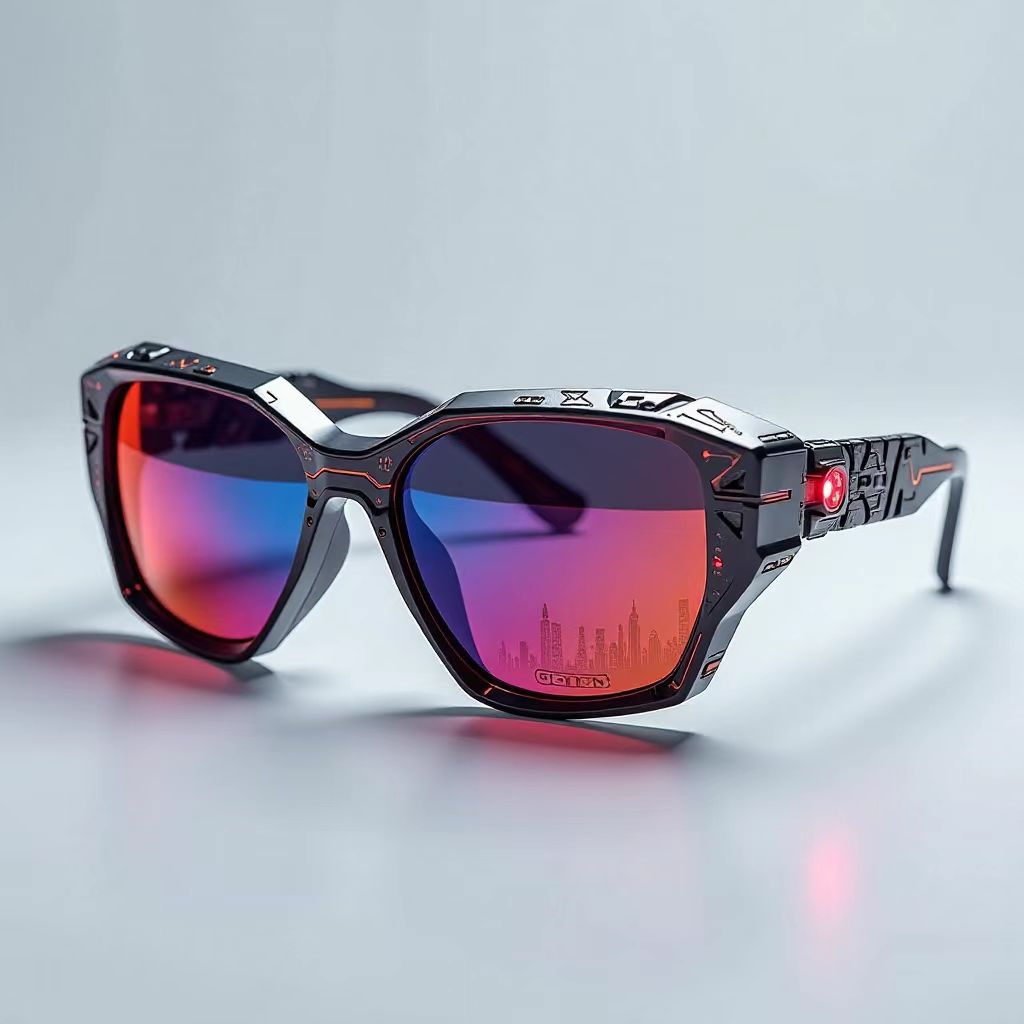
In 2026, eyeglasses designs will present a dual wave of “New Chinese Cyber” and “Glamorous Minimalism”. The New Chinese Cyber is based on traditional Eastern craftsmanship and incorporates futuristic elements: bamboo-like frame legs combined with micro-circuit textures (such as the upgraded version of GUCCI craftsmanship), and the biomimetic folding structure can expand to a diameter of 1.2 meters, achieving a collision of traditional aesthetics and technological functions. 。 The ornate maximalism style combines gemstone-set frames (such as the collaboration with Chopard) with fluid metal lines, and embeds programmable LED light strips into the frame legs. When worn at night, they create a dynamic light and shadow art installation, meeting the demands for high-profile individual expression.
Smart eyeglasses have entered the “unfelt interaction” stage. The lenses of products like Meta Ray-Ban Display have been compressed to 1.2mm, with AR navigation accuracy reaching ±5cm. They also support early-stage brain-computer interface technologies (such as eye-tracking peripheral control). The design adopts a modular magnetic connection structure, enabling seamless switching between sports goggles and evening eyeglasses。
2. Color Trends: The Dual Infiltration of Virtual and Reality
The virtual digital color palette has become the core of the high-end product line, drawing inspiration from the interface of the metaverse: “Virtual Green” (Virtua Green) and “Data Grey” (Data Grey) can be dynamically switched through electrochromic film sheets. The miniature projector on the temple can project personalized totems, meeting the aesthetic demands of the Z-generation for the integration of virtual and reality. 。 Low-saturation classic colors continue to be popular. Corn Milk and Cocoon Brown, with their matte texture, have become the mainstream base color for large frame designs. They not only echo the environmental trend but also convey a sense of healing.
High-saturation technological colors focus on sports and street scenes: Passion Violet and Granite Blue are applied to futuristic goggles, combining 3D hollow structure to create optical illusions. The lenses feature self-repairing coating, and minor scratches are automatically repaired within 24 hours, aligning with the aesthetics of outdoor functionality.
3. Future breakthroughs in materials and structure
Biodegradable materials dominate. Bamboo fiber frames have a 30% weight reduction, and the lenses use corn starch-based biodegradable polymers, with the degradation cycle shortened to 3 months. An economic repair model has emerged, with a screwless modular architecture (such as the BJ8002 model) reducing repair costs by 60%. The brand has launched a “ten-year warranty plan” to counter fast fashion. 。 At the Paris Fashion Week, the joint collection by Victor Wong and RAY CHU utilized AI intelligent cutting technology to achieve a sculptural and three-dimensional shape for the eyeglasses frames, allowing for a replaceable “W” hollow structure that echoes the trend of emotional intelligence.
Summary: In 2026, eyeglasses have transcended the realm of functional accessories and have become a super carrier connecting biotechnology, digital ecology, and humanistic aesthetics. Contradictory aesthetics reconfigures the visual language, virtual colors expand the perception dimension, and sustainable technology redefines industry ethics – this is not only the evolution of fashion, but also a milestone in the symbiotic relationship between humans and technology.