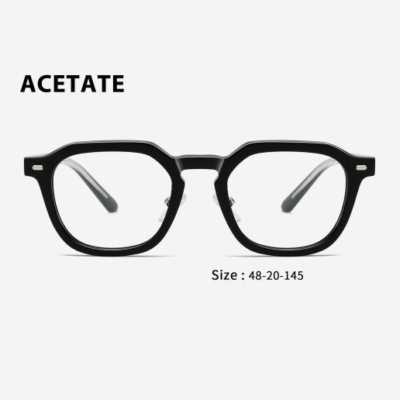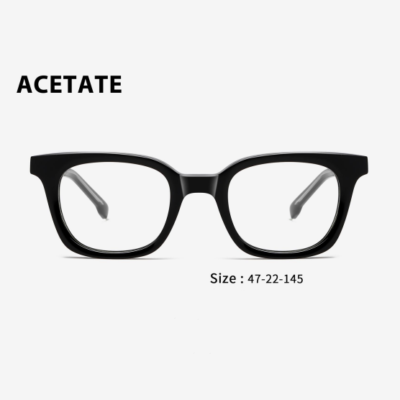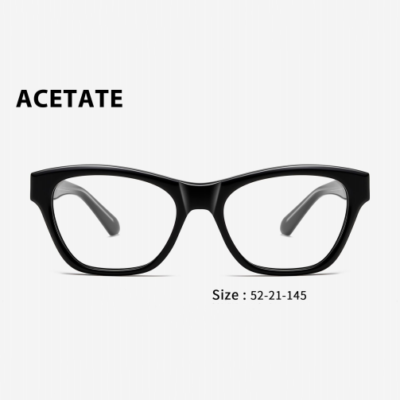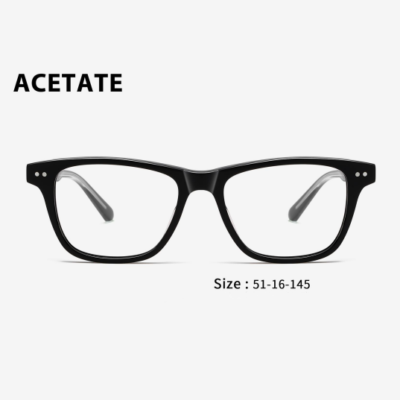
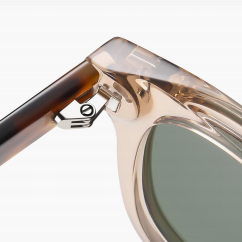
The hinge of eyeglasses serves as the critical component connecting the temple and the frame, with its structural stability directly influencing wearing comfort and product longevity. Loose screws represent a prevalent cause of hinge failure, necessitating systematic improvements in structural design, material selection, and anti-loosening technologies.
1. Structural Optimization Strategies
Reducing dependence on screws in hinge design
Replace conventional screw-based fixation with non-threaded connection mechanisms, such as patented latch and elastic telescopic component assemblies. By utilizing the interaction between a socket head and an elastic protruding column, spring force enables self-locking of the temple, thereby eliminating the risk of screw loosening. Alternatively, a patented spherical hinge structure completely avoids the use of screws, enhancing impact resistance through the integration of a hinge ball and a rotating ring with a socket configuration.
Enhancing mechanical performance of fastening structures
Adopt a double-nut top-locking design, which achieves self-locking via axial pre-tensioning forces generated by upper and lower nuts. The lower nut bears the primary clamping load, while the upper nut increases friction within the threaded pair through reverse torque application. Experimental data indicate that this approach reduces pre-tension force attenuation by over 60%. Additionally, incorporating spring washers can compensate for minor displacements and maintain consistent clamping force.
2. Material and Process Enhancements
Selection of corrosion-resistant materials
Prioritize the use of 316L stainless steel or titanium alloy for screws, which exhibit more than three times greater salt spray corrosion resistance compared to standard carbon steel. For hinge rotating components, apply a diamond-like carbon (DLC) coating to reduce the coefficient of friction to below 0.1.
Self-lubricating structural design
Integrate self-lubricating bushings—such as those based on patented designs—into the hinge shaft bore. These bushings utilize a composite material composed of PTFE and copper powder, offering both low friction and high wear resistance. When combined with nylon 66 anti-loosening nuts, this solution reduces wear on threaded pairs and prevents loosening effectively.
3. Integration of Anti-Loosening Technologies
Mechanical anti-loosening combination strategy
Implement a composite “double nut + cotter pin” anti-loosening system, in which the upper nut is tightened to the standard torque (recommended: 18–22 N·m), while the lower nut is pre-tightened to 70% of the standard value. The cotter pin passes through aligned holes in the nut and bolt, forming a mechanical lock. This configuration has demonstrated durability under 500,000 load cycles during vibration testing.
Application of intelligent monitoring technology
Incorporate a micro pressure sensor within the hinge structure—referencing established fastener monitoring systems—to enable real-time monitoring of pre-tension force. When the measured force falls below a predefined threshold, the user is alerted via a tactile feedback zone on the temple, facilitating timely maintenance and enabling a preventive maintenance approach.
4. Optimization of Assembly Processes
Graded torque control
Employ a three-stage tightening process: first, tighten to 50% of the standard torque to eliminate assembly clearance; second, increase to 80% to mitigate material creep; finally, achieve full tightening at 100% using a calibrated digital torque wrench. This procedure follows principles of pre-load control theory to ensure precision and consistency.
Error-proofing in design
Incorporate a directional keyway (e.g., a patented slot structure) into the threaded hole of the anchor head to ensure unidirectional screw insertion. This feature prevents cross-threading and mitigates early failures caused by improper assembly.
Conclusion
Through integrated optimization involving structural innovation, advanced materials, and intelligent monitoring, the incidence of hinge screw loosening can be reduced by over 90%. The initial implementation of a patented non-threaded connection system, combined with mechanical anti-loosening techniques, establishes a multi-layered protection framework that significantly enhances product reliability.