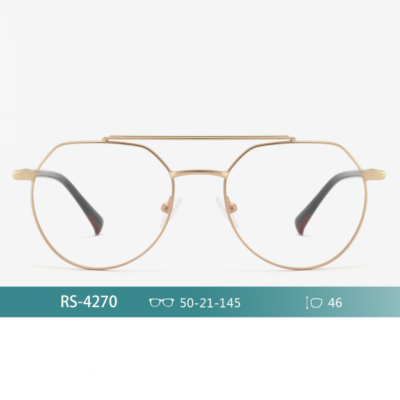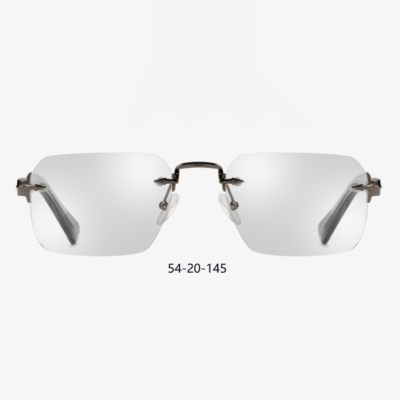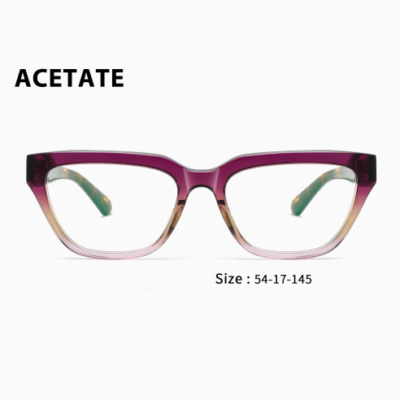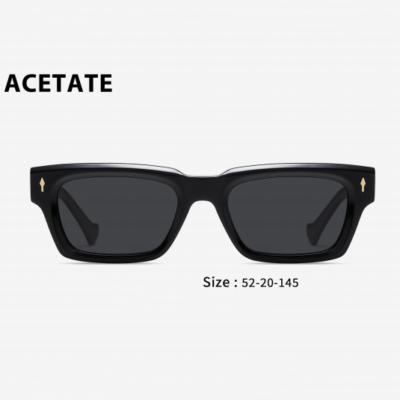

Inventory management remains a critical challenge for eyewear businesses. Many companies face the recurring issue of unsold inventory—styles that initially showed promise but have remained stagnant in warehouses for six months or longer. This results in tied-up working capital, forced discounting, and margin erosion. While large-volume orders offer lower per-unit costs, they shift significant risk to the supplier: market rejection can lead to overstocking, returns, sluggish sales velocity, and ultimately, profit dilution or loss.
In contrast, a small-batch order strategy enables data-informed decision-making. Initial orders of 200–500 units serve as market validation tools—assessing consumer reception, repeat purchase behavior, and early sales velocity. Though unit costs are modestly higher, this approach preserves liquidity, minimizes obsolete stock, and maintains operational agility to pivot quickly toward high-potential designs. Empirical evidence suggests that commercially successful eyewear enterprises often follow a phased production pathway: concept validation → small-batch pilot → performance-based scale-up.
During product launch cycles—particularly amid rapid annual design turnover—predictive certainty is inherently limited. A small-batch entry allows for real-time market feedback within 10–14 days. Sales velocity, customer reviews, and return rates provide objective metrics to guide subsequent decisions: accelerate production if performance thresholds are met; halt further investment if indicators underperform. This methodology reduces inventory risk to near-zero levels and lowers the cost of innovation—enabling confident experimentation with new aesthetics, materials, or functional features.
Once empirical data confirms strong market acceptance, scaling to larger volumes becomes both justified and profitable. Economies of scale then reduce unit costs, while demand certainty ensures faster inventory turnover, improved cash conversion cycles, and enhanced gross margin realization. For example, a Shenzhen-based sunglasses brand applied this framework last year: three new models were introduced via small batches; two demonstrated robust demand signals, prompting an immediate 3,000-unit order. All units sold out within six months—with zero overstock and gross margins increasing from 28% to 47%.
Ultimately, profit maximization hinges not on minimizing unit cost alone, but on optimizing the balance between risk mitigation and margin capture. Large-volume production is appropriate for proven, evergreen styles with stable demand profiles; small-batch execution is the strategic imperative for new product development and market expansion. Rather than equating volume with efficiency, businesses should prioritize inventory discipline as the foundational enabler of sustainable growth.
Shenzhen Grand Eyewear specializes in small-batch order , manufacturing solutions tailored to the dynamic demands of the global eyewear market.
We believe that the quality is the soul of an enterprise.
Shenzhen Grand Eyewear — Your preferred choice.
If you have any question ,please feel free to contact us at anytime . thank you.