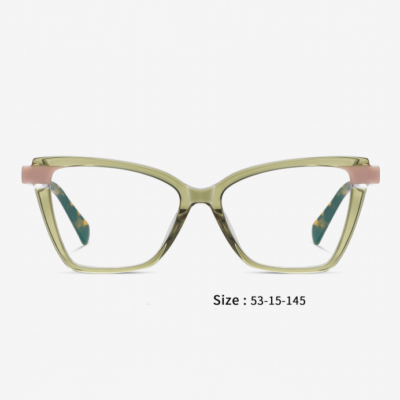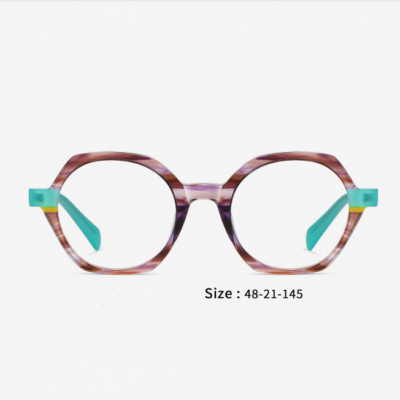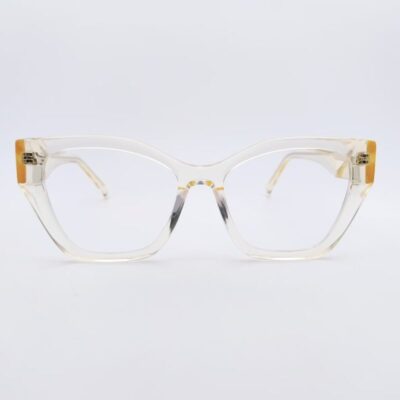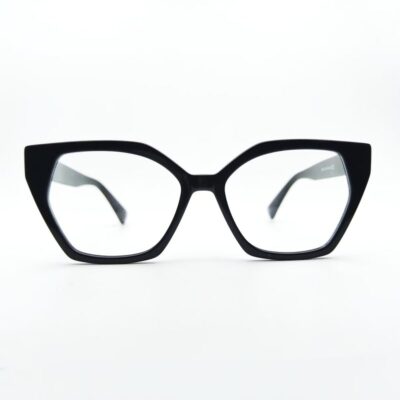

Whenever we put on #eyeglasses to see the world more clearly, have we ever considered the origins of this invention that profoundly influenced human civilization? The development of eyeglasses was not a random occurrence; rather, it represented a long and continuous accumulation of human wisdom spanning centuries.
As early as the 5th century BC, ancient Greek philosophers discovered that spherical crystals could magnify objects. The Roman scholar Seneca also documented the use of a glass sphere for reading purposes. However, a major breakthrough occurred in 13th-century Venice, Italy, where Venetian glassmakers developed transparent glass, which laid the foundation for lens production. In 1286, a craftsman from Pisa connected two lenses with rivets, creating the first wearable pair of eyeglasses.
Historians identified the earliest known depiction of someone wearing eyeglasses in a fresco painted by Tommaso da Modena in 1352. In the painting, a bishop is shown wearing two lenses on his nose while concentrating on reading religious texts. This image captured a pivotal moment in human history—the triumph over visual limitations.
Remarkably, ancient craftsmen demonstrated extraordinary ingenuity. In an era lacking precise measuring instruments, they relied on their tactile senses to grind glass into precisely curved lenses and ingeniously secured them using metal frames. Each pair of eyeglasses had to be custom-fitted, and the production process often took several weeks. This meticulous craftsmanship enabled countless scholars, scribes, and artisans to continue their intellectual and professional pursuits, thereby contributing to the advancement of human civilization.
The dissemination of eyeglasses also reflects the integration of Eastern and Western knowledge. During the Yuan Dynasty, Marco Polo introduced glasses to China, where they were known as “Ai Dai.” The Ming Dynasty text “Nan Village’s Idle Farming Record” described elderly individuals using eyeglasses for reading. Furthermore, Emperor Qianlong of the Qing Dynasty was an avid user who owned various types of specialized eyewear.
From two small lenses emerged a groundbreaking invention that transcended physiological limitations. Eyeglasses not only extended the professional lives of intellectuals but also contributed to the flourishing of academic thought during the Renaissance. As we today benefit from advanced visual assistance technologies, it is worth reflecting on this 800-year journey of innovation—each seemingly simple pair of eyeglasses embodies the human spirit of relentless exploration and the determination to improve life.
Our ancestors demonstrated through practice that the most impactful inventions often arise from the simplest needs. It is this pragmatic wisdom combined with visionary thinking that has enabled human civilization to continually transcend boundaries, progressing from ambiguity to clarity, and from possibility to infinity.