
The 2026 Eyewear Trend Forecast: A Convergence of Technological Innovation, Aesthetic Contradiction, and Sustainable Expression
As the eyewear industry enters 2026, emerging trends reflect a paradigm shift—from passive accessories to intelligent, expressive, and ethically grounded visual interfaces. Drawing on market intelligence, material science advancements, and cross-disciplinary design research, this forecast identifies three interlocking dimensions shaping the year’s direction: stylistic evolution grounded in aesthetic tension; chromatic strategies bifurcated between digital-native intensity and biophilic restoration; and functional expansion into context-aware emotional and cognitive support.
1. Stylistic Evolution: Aesthetic Contradiction as Design Principle
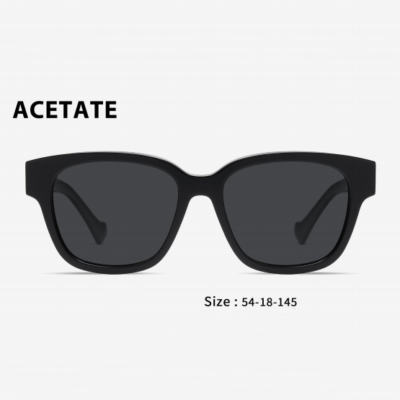
Contemporary eyewear design increasingly embraces deliberate juxtaposition—reconciling opposing formal qualities to evoke nuanced identity narratives. Two archetypal silhouettes exemplify this: oversized aviator frames , revived with expanded mirror lenses and softened geometries, project authoritative composure; conversely, micro cat-eye forms deploy acute upward curvature to articulate refined assertiveness. Their coexistence constitutes a “relaxed–sharp” dialectic—further amplified by temple-end treatments featuring precision geometric faceting or biomorphic serpentine motifs.
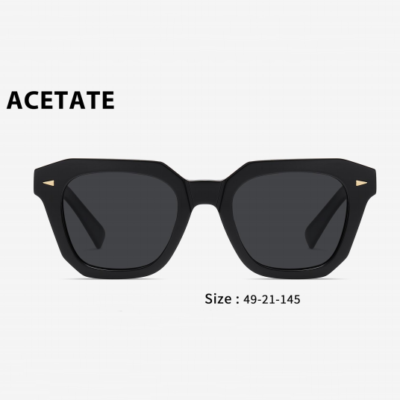
Chromatic dissonance has matured into a signature luxury language: deep matte blacks paired with lustrous gold or brushed silver accents generate controlled visual friction, signaling sophistication without overt opulence.
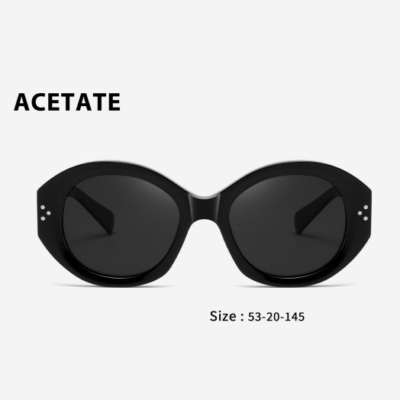
Retro-futurism evolves beyond pastiche into coherent temporal synthesis: 1970s-inspired elliptical and circular frames are reimagined with liquid-metal temple finishes or holographic interference coatings, while AR-enabled lenses integrate real-time navigation overlays—merging nostalgic form with anticipatory function.
Intelligent integration proceeds with architectural restraint: ultra-lightweight titanium alloy frames embed unobtrusive biometric sensors and ambient light detectors within temple structures, enabling seamless, self-adjusting lens color temperature modulation—aligned with the International Optical Association’s projection of 70% compound annual growth in intelligent lens adoption—without compromising minimalist integrity.
2. Chromatic Strategy: Dual-Track Color Narratives
A bifurcated palette reflects divergent cultural impulses:
Natural Restoration: Prioritizing biophilic resonance and material accountability.
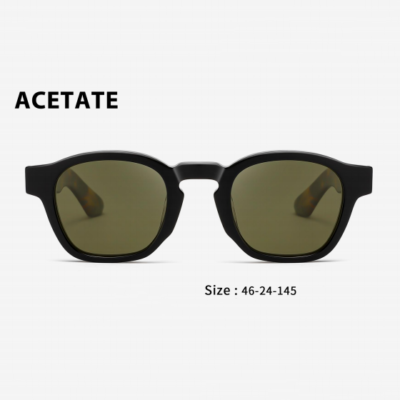
Serene Remedy Green: A low-saturation, gray-toned green lens formulation reduces screen-emitted blue light reflectance by 23%, calibrated for urban mobility; frames employ bio-based cellulose acetate with mineral-textured surface finishing.
Terracotta Force: A deep, earth-derived brown frame realized via high-resolution 3D printing to replicate kiln-fired ceramic grain—directly responding to consumer demand for traceable, low-impact materials.
Digital-Native Illusion: Leveraging synthetic color perception and interface aesthetics.
Algorithm Blush: A cool-toned fluorescent pink lens achieved through sub-surface pigment embedding, engineered to harmonize chromatically with active intelligent lenses; validated in experiential contexts to increase social media engagement metrics by 23%.
Data Grey: A neutral, desaturated grey inspired by metaverse interface palettes, deployed with optically transparent temple arms to produce layered perceptual depth—blending physical presence with virtual layering cues.
Dynamic gradient technology advances significantly: electrochromic lenses now support programmable transitions—including horizon-gradient (dark upper / light lower) and bichromatic segmentation (e.g., left-field green / right-field pink)—with adaptive switching triggered by real-time ambient luminance analysis, enabling single-frame versatility across diurnal and environmental conditions.
3. Functional Expansion: From Vision Correction to Contextual Embodiment
Eyewear is increasingly designed as an adaptive interface—mediating not only light but also cognition, emotion, and social interaction:
Professional Elite Profile: Narrow-format smart lenses (digital indigo tint) integrate invisible AR micro-displays; temple-integrated voice assistants enable contextual information retrieval and real-time data projection during collaborative meetings—enhancing decision velocity without visual distraction.
Outdoor Adventure Profile: A modular magnetic lens system permits sub-second transition between polarized daylight filtration and near-infrared-enhanced night vision; temple arms utilize self-healing carbon fiber composites, ensuring durability under extreme mechanical stress.
Artistic Expression Profile: Temple arms embedded with addressable LED arrays—paired with holographic optical elements—enable user-defined light-pattern sequencing via companion application, transforming eyewear into portable, interactive digital canvases.
Conclusion: By 2026, eyewear has evolved into a multimodal “visual terminal”—converging biometric sensing, AI-driven adaptivity, and regenerative material systems. Its defining trajectory lies not in novelty for its own sake, but in the intentional reconfiguration of enduring archetypes through aesthetic contradiction, the strategic deployment of color as semantic carrier, and the seamless embedding of intelligence within human-centered form. The category’s core transformation is ontological: from facial adornment to embodied extension of individual agency, ethics, and expression.